Indonesian coffee has a strong reputation. Sumatra Mandheling, Java Estate, Toraja, Flores Bajawa — these names carry weight in specialty circles and green coffee trading. They also get misused. Beans labeled with these origin names are not always what they claim to be, and buyers who don't know the supply chain pay for the name while getting something else.
This article covers what Indonesian coffee actually is, how it's processed, what the grades mean, and what due diligence looks like when you're building a supply relationship from this origin.
The Major Producing Origins
Indonesia has several distinct coffee-growing regions, each with different cup profiles and production volumes.
Sumatra is the largest producing island. The key growing areas are Aceh (Gayo), North Sumatra (Mandheling, Lintong), and South Sumatra (Semendo). Sumatran coffee has a strong, heavy body with low acidity, earthy and herbal notes, and a characteristic "Sumatra-ness" that comes largely from wet-hulling (see below). It's polarizing — buyers either love the profile or find it too funky.
Java has a long export history and some of the few government-managed estates (PTPN) in Indonesia's coffee sector. Java estate coffees are typically fully washed, with a cleaner, brighter profile than Sumatra. Volume is lower, and estate-certified supply is limited.
Sulawesi (Toraja, Kalosi) produces less volume than Sumatra but is well-regarded for its balanced cup with good structure and mild acidity. Toraja specifically has consistent buyer demand in Japan and the US specialty market.
Flores (Bajawa, Manggarai) is smaller still but produces quality beans with a medium body and chocolatey notes. Buyers building specialty portfolios often include Flores alongside Sumatra for range.
Bali (Kintamani) is known for citrus-forward, honey-processed coffees. Volume is limited. Quality is reliable from verified farms.
Papua produces some of Indonesia's finest arabica, largely from the Baliem Valley and Wamena areas. Very low volume, high demand. If you're sourcing for premium retail roasters, this is worth pursuing.
Wet-Hulling: Why Indonesian Coffee Tastes the Way It Does
Most Indonesian arabica is processed using a method called giling basah — wet-hulling. This is different from both washed and natural processing used elsewhere.
In wet-hulling, coffee is pulped, briefly fermented, then partially dried with the parchment still on. The parchment is then hulled while the bean is still at high moisture content (around 35–40%), then dried again to export moisture levels (≤12.5%).
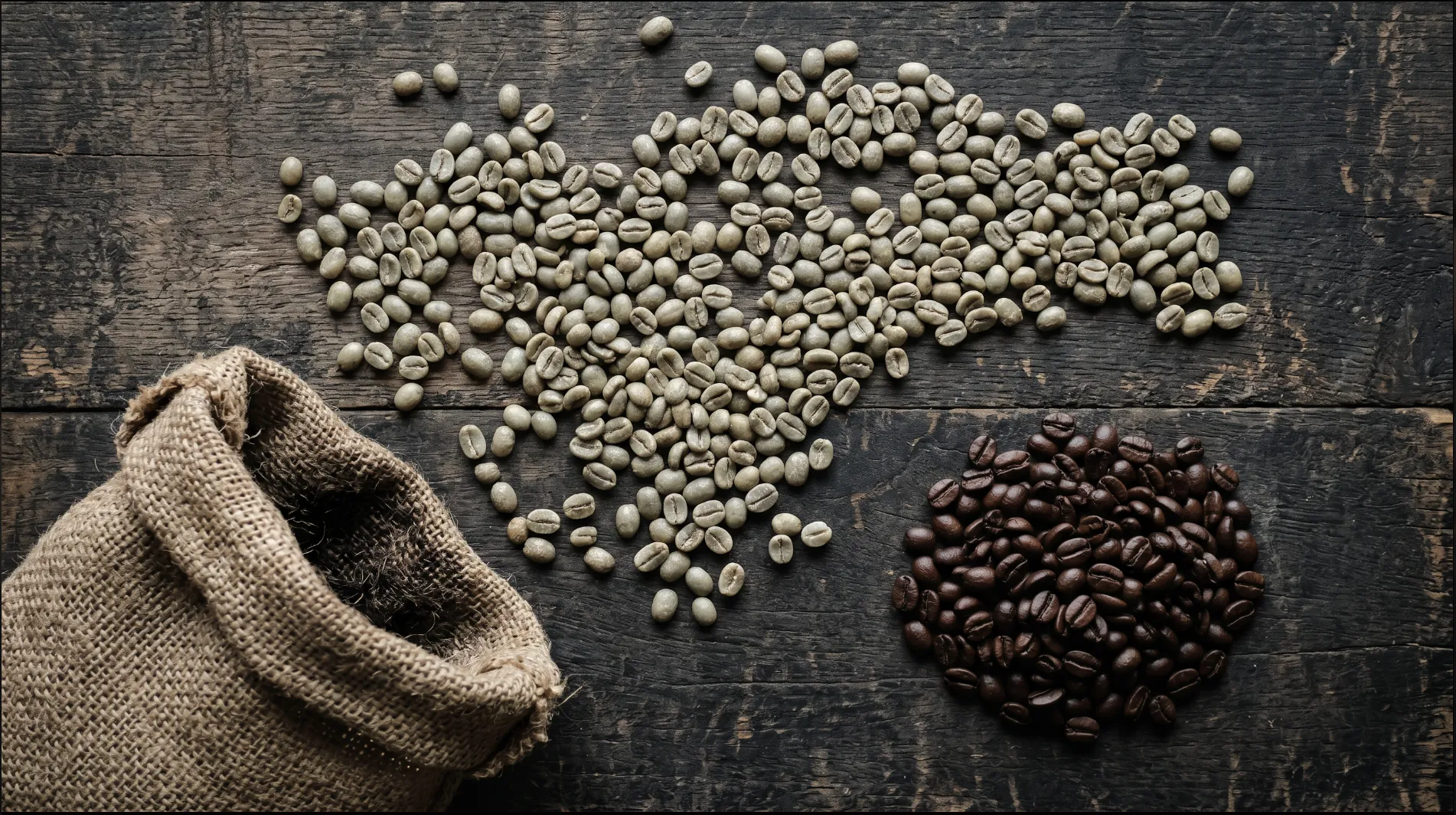
The result is a swollen, porous bean that dries to a characteristic blue-green color and develops earthy, mossy, full-bodied flavors. It's why Sumatran coffee tastes like Sumatran coffee. It also means the beans are more porous and sensitive to storage and shipping conditions.
If you're importing Indonesian arabica for specialty roasters, moisture management during transit matters more than with fully washed origins. Shipments should move promptly after the harvest cycle, and container moisture control is worth specifying.
Robusta: The Volume Story
Indonesia is a major Robusta producer. Lampung (South Sumatra) and East Java are the primary Robusta origins. Indonesian Robusta is used widely in:
-
Instant coffee manufacturing
-
Espresso blends (as a base for body and crema)
-
RTD coffee production
-
Domestic blending
Robusta here is priced competitively and available in large volumes. Quality ranges from clean, well-dried lots to smoky or off-flavor beans from poor drying practices. Buyers sourcing Robusta for food manufacturing need to specify acceptable off-flavor tolerance in their quality contracts.
Grades and Specifications
Indonesia uses the SNI grading system for green coffee:
|
Grade |
Defect Score |
Moisture |
Application |
|---|---|---|---|
|
Grade 1 |
≤11 defects per 300g |
≤12.5% |
Specialty, premium export |
|
Grade 2 |
≤25 defects |
≤12.5% |
Commercial export |
|
Grade 3 |
≤44 defects |
≤12.5% |
Industrial/bulk |
|
Grade 4a/4b |
Up to 103 defects |
≤13% |
Low-grade domestic/industrial |
For specialty applications, Grade 1 is the entry point, but grade alone doesn't capture cup quality. Request a green coffee sample for laboratory analysis (screen size, moisture, density, water activity) and a roasted sample for cupping before committing to volume.
For commercial and industrial applications (blending, instant, RTD), Grade 2 and 3 represent the practical bulk market. Volume buyers in these categories typically set their own acceptable quality levels (AQL) in supply contracts rather than relying solely on SNI grade.
Certifications Relevant to Indonesian Coffee
Buyers importing Indonesian coffee into the EU or US markets increasingly need documentation beyond grade certificates. Common certifications available from Indonesian suppliers include:
-
Organic (USDA/EU): Available from certified farms, primarily in Aceh, Toraja, and Flores. Requires chain-of-custody documentation.
-
Rainforest Alliance / UTZ: Available from some larger cooperatives and estates.
-
Fair Trade: Less common for Indonesian origins but available from some cooperative suppliers.
-
Specialty Coffee Association (SCA) Score: For specialty-grade lots, buyers typically require a minimum SCA cupping score (≥80 for specialty designation).
Note: Certification claims need to be verified against active certificates, not just supplier assurances. Ask for the certificate number and verify directly with the certifying body.
What Nusagrade Offers
Nusagrade sources Indonesian green coffee from producing regions across Sumatra, Sulawesi, and Flores. We work with mill and cooperative partners who control their own processing — we don't buy finished bags from aggregators without traceability.
Our current catalog includes:
-
Sumatra Gayo Arabica — Wet-hulled, Grade 1, earthy/full-body profile
-
Sulawesi Toraja Arabica — Semi-washed, Grade 1, clean/balanced
-
Flores Bajawa Arabica — Wet-hulled, Grade 1, chocolatey/medium body
-
Lampung Robusta — Grade 2 and 3, clean cup, competitive pricing for industrial buyers
Export packaging: 60kg GrainPro-lined jute bags (arabica), 60kg jute bags (robusta).
MOQ: 1 FCL (~18MT), with sample availability pre-commitment.
Documentation: Certificate of Origin, Phytosanitary Certificate, Health Certificate, full lot traceability.
Timing and Harvest Cycles
Indonesian coffee does not follow a single harvest cycle — origins stagger throughout the year, which means supply is available year-round with planning.
-
Sumatra (Gayo): Main harvest October–March
-
Sulawesi (Toraja): Main harvest May–September
-
Flores: Main harvest June–September
-
Java: Main harvest July–September
For buyers who want consistent supply across the year, Indonesia works well as an origin precisely because you can rotate between regions rather than waiting on a single crop.
Contact
Request samples or discuss supply terms at hello@nusagrade.com or through nusagrade.com.
Nusagrade — Premium Grade. Pure Indonesia.