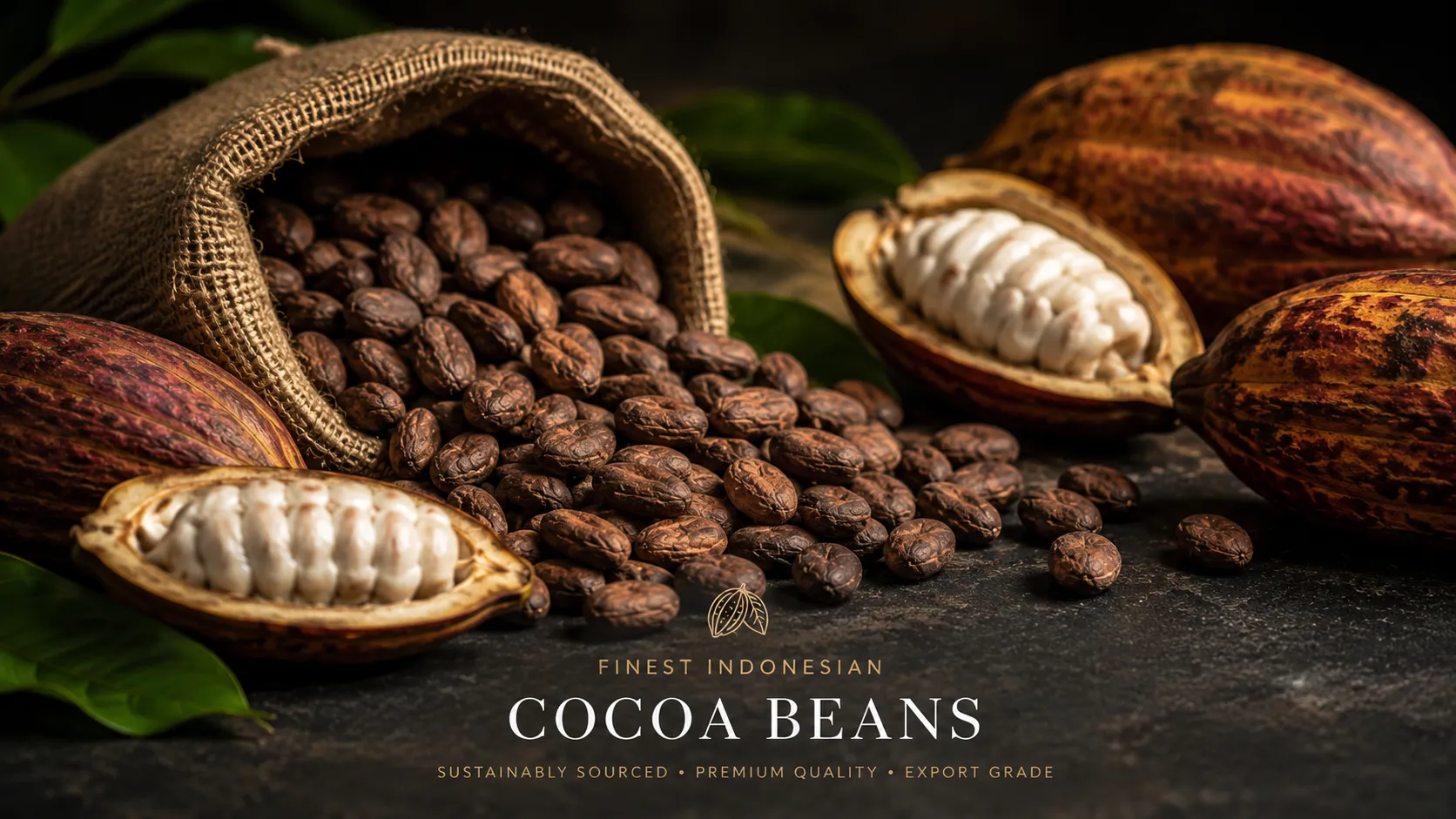
Indonesia is the third-largest cocoa producer in the world. That fact gets repeated a lot, usually in the first sentence of supplier pitches. What gets mentioned less often: the quality gap between Indonesian cocoa and what most buyers actually receive is wider than it needs to be — and it comes down almost entirely to who you're buying from and how the beans were processed.
This article is for procurement managers, chocolate manufacturers, and commodity traders who want a clear picture of Indonesian cocoa before they commit to a supply chain.
Where Indonesian Cocoa Actually Comes From
The bulk of Indonesia's cocoa output comes from Sulawesi — specifically South Sulawesi and Central Sulawesi — along with Sumatra and Papua. Each origin has a distinct flavor profile and production characteristic.
Sulawesi beans are the most internationally traded. They tend toward a mild, clean flavor with low acidity. Fermentation practices here vary widely by smallholder, which is the single biggest quality variable buyers encounter.
Sumatra produces a bolder, earthier bean with higher fat content. It's popular with manufacturers who want strong chocolate character rather than a neutral base.
Papua is smaller in volume but produces some of the most sought-after fine flavor cocoa in the world. If you're sourcing for craft chocolate or premium applications, this is worth your attention.
The Fermentation Problem — and Why It Matters to You
Most Indonesian cocoa is grown by smallholder farmers on plots under 2 hectares. These farmers typically sell fresh wet beans to collectors, who aggregate and sometimes ferment — or don't. Inadequate fermentation produces astringent, harsh-tasting chocolate with poor yield in processing.
The majority of Indonesian cocoa exported as "bulk" falls into this category. It's not bad cocoa. It's underprocessed cocoa.
The difference between a well-fermented Sulawesi bean and a poorly fermented one is not subtle. A good fermentation cycle (5–7 days for Forastero-type, shorter for some Trinitario) breaks down the pulp, develops precursor flavor compounds, and reduces tannin levels. Skip or rush this step and no amount of roasting will recover what was lost.
When you're evaluating a supplier, ask specifically: do they control their own fermentation, or are they buying post-ferment from collectors? If they can't answer that question directly, that tells you something.
Grades and What They Actually Mean
Indonesia uses SNI (Standar Nasional Indonesia) grading for cocoa beans. The main export grades are:
-
Grade I (SNI 01-2323): Maximum 3% defective beans, moisture ≤7.5%, good fermentation index
-
Grade II: Maximum 4% defective beans, slightly relaxed moisture and fermentation specs
-
Grade III: Acceptable for bulk industrial use, higher defect tolerance
For food manufacturing applications, Grade I is the practical minimum. For craft chocolate or premium applications, you'll want to go beyond grade certification and look at the actual fermentation index and sensory profiles.
Some suppliers export beans labeled "Grade I" that technically meet the defect count specification but have inconsistent fermentation. This is legal. It's also a sourcing headache. Third-party quality inspection before shipment is worth the cost.
Cocoa Butter Fat Content and Processing Applications
Indonesian cocoa butter fat content typically runs 50–55%, which is in line with West African bulk grades. This makes Indonesian beans suitable for:
-
Industrial chocolate manufacturing
-
Compound chocolate production
-
Cocoa butter extraction
-
Cocoa powder production (particularly high-fat powder)
For confectionery manufacturers who need specific melting profiles or texture consistency, fat content per lot matters. Request the Certificate of Analysis on fat content, not just grade documentation.
What Nusagrade Sources and How We Work
Nusagrade sources Indonesian cocoa directly from verified processing partners in Sulawesi and Sumatra. We don't buy from spot collectors.
Every lot we export goes through:
-
Pre-shipment moisture and defect inspection
-
Fermentation index verification
-
Certificate of Origin (COO) and Phytosanitary Certificate
-
Full documentation for import clearance in the EU, US, and Asian markets
We work with buyers on minimum order quantities starting from 1 FCL (approximately 18–20MT for cocoa beans in jute bags), with sample availability for qualification before commitment.
Standard export packaging: 60kg jute bags, moisture barrier inner liner available on request.
Lead time: 3–4 weeks from order confirmation to loading, depending on origin and current harvest cycle.
Pricing and Market Conditions
Indonesian cocoa is priced at a discount to ICCO benchmark, typically ranging from -$50 to -$150/MT depending on grade, fermentation quality, and market conditions. The discount exists partly because of the reputation gap — buyers price in quality risk.
When you source from a supplier who controls fermentation and provides documented quality, that discount should narrow. You're paying for certainty, not just volume.
Current market conditions as of 2025 show elevated cocoa prices globally due to supply deficits from West Africa. Indonesian origin has seen renewed buyer interest as a result. This is a good time to establish a direct supply relationship before capacity tightens further.
Getting Samples
If you're evaluating Indonesian cocoa for your supply chain, the practical first step is a sample lot evaluation. We can provide 2–5kg samples of our current Sulawesi and Sumatra grades for laboratory and sensory analysis.
Contact us at hello@nusagrade.com or visit nusagrade.com to request samples or discuss volume requirements.
Nusagrade — Premium Grade. Pure Indonesia.